This alloy maintains its mechanical properties at elevated temperatures, without the use of either silver or thorium. The alloy is stable for long term exposure up to 250˚C.
Elektron® WE43B also has excellent corrosion resistance characteristics.
Minimum specification tensile properties:
- 0.2% proof stress: 172 MPa
- Tensile strength: 220 MPa
- Elongation: 2%
Castability
Fine grained and pressure tight with good casting characteristics.
Pattern makers shrinkage factor
1.5%
Weldability
Fully weldable by the tungsten arc inert gas (TIG) process, using filler rods of the parent alloy composition.
Machining
Elektron WE43B castings, like all magnesium alloy castings, machine faster than any other metal. Providing the geometry of the part allows, the limiting factor is the power and speed of the machine rather than the quality of the tool material. The power required per cubic centimetre of metal removed varies from 9 to 14 watts per minute depending on the operation.
Surface treatment
Normal protective treatments apply for Elektron WE43B but some chromating baths may need to be modified for the satisfactory treatment of castings. Please refer to Luxfer MEL Technologies Design Guide.
Corrosion resistance
- ASTM B117 salt spray test
- Corrosion rate: 0.1–0.2 mg/cm2/day
- 10 mpy
Typical tensile properties
- 0.2% proof stress: 185 MPa
- Tensile strength: 265 MPa
- Elongation: 7%
Typical compressive properties
- 0.2% proof stress: 187 MPa
- Ultimate strength: 323 MPa
Typical shear properties
Ultimate stress: 160 MPa
Fracture toughness
KIC: 15.9 MPa m1/2
Fatigue properties
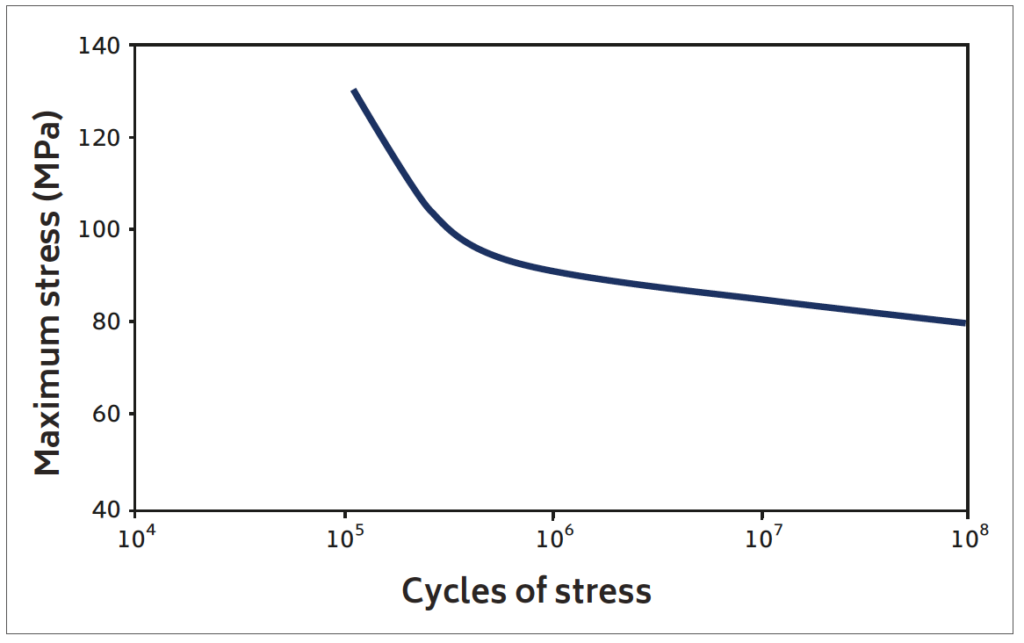
Figure 1. Rotating bend fatigue test.
Typical tensile properties
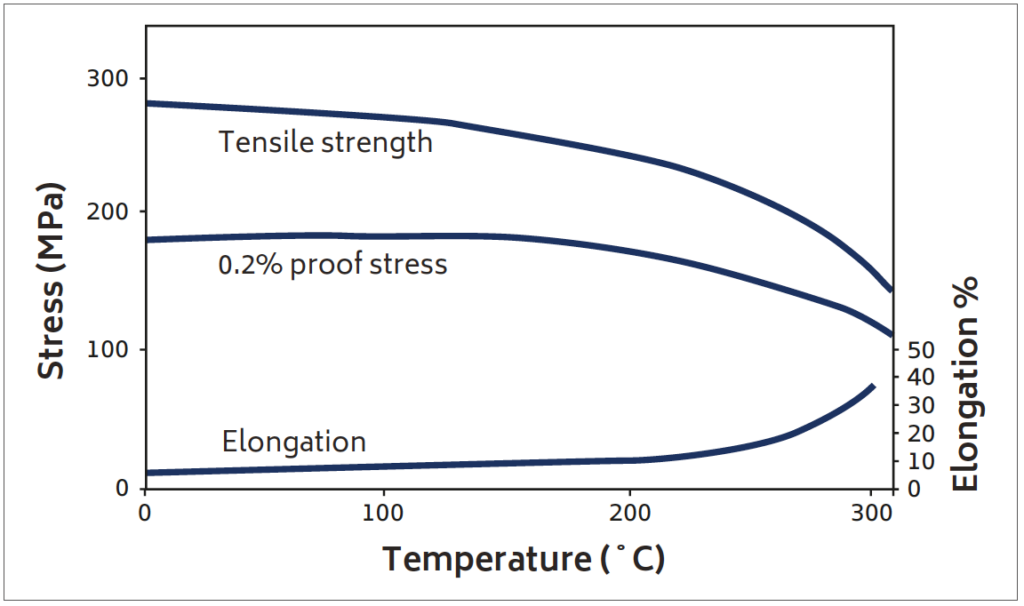
Figure 2. Effect of temperature on tensile properties.
Creep properties
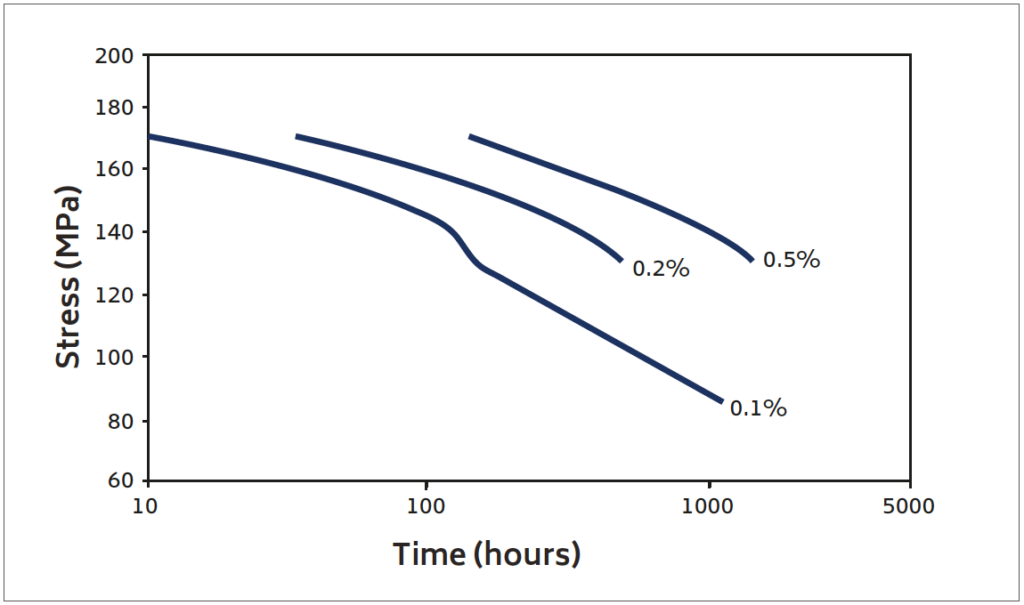
Figure 3. Stress / time relationship for specified creep strains at 200˚C.
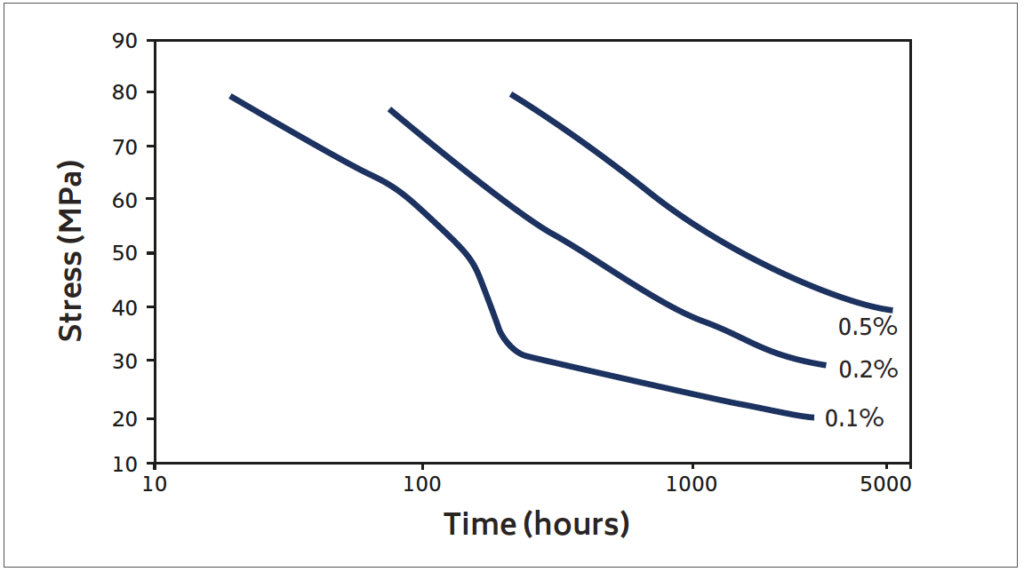
Figure 3. Stress / time relationship for specified creep strains at 200˚C.
Fatigue properties
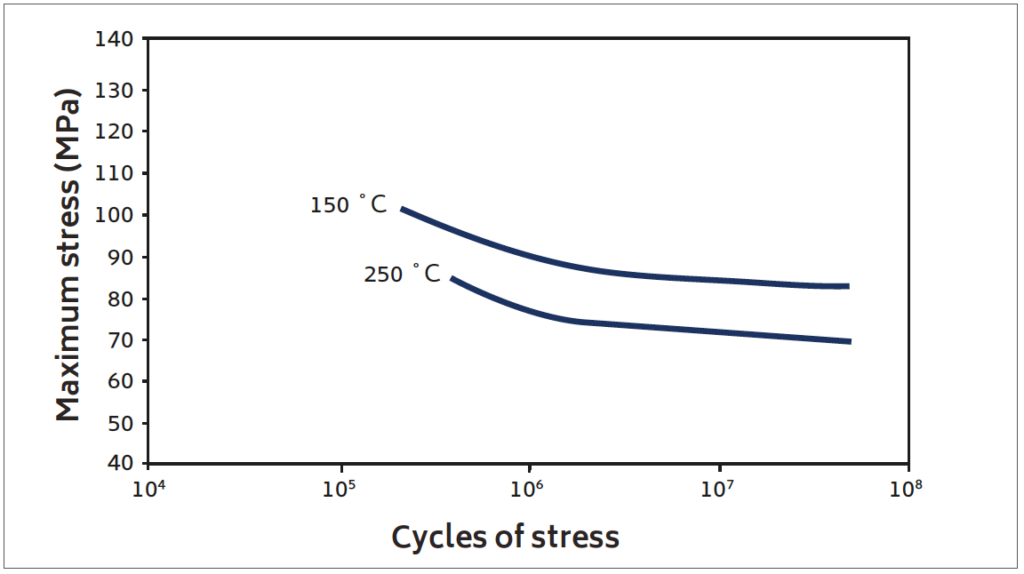
Figure 5. Rotating bend fatigue test.
Table 1. Cut up properties on samples taken from actual castings.